
内容简介
房龙以如椽大笔,在《给大家看的全球通史》这部雅俗共赏的史学经典中,以生动晓畅的笔触和浓厚的人文情怀,为读者展现了一幅波澜浩荡、绵延数千年的人类文明画卷:
作者简介
房龙,美国著名学者、作家、历史地理学家。先后就读于美国康奈尔大学和德国慕尼黑大学,获博士学位。他以生动通俗的文笔普及历史知识,代表作《人类的故事》荣获首届纽伯瑞儿童文学奖,另著有《宽容》《圣经的故事》等经典作品,深受广大读者喜爱。
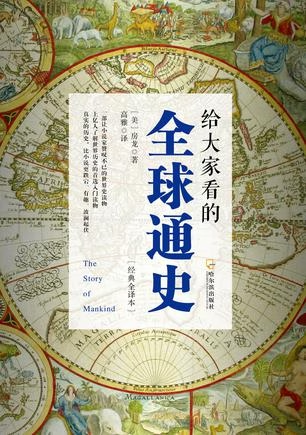
书名:
给大家看的全球通史
ISBN:
9787548425151
作者:
(美) 房龙著
出版社:
哈尔滨
出版时间:
2016-06-01
图书分类:
普及读物
语言:
chi
开本:
16开-轻型纸
版次:
1
装帧:
平装
页数:
322页
字数:
300千字
房龙以如椽大笔,在《给大家看的全球通史》这部雅俗共赏的史学经典中,以生动晓畅的笔触和浓厚的人文情怀,为读者展现了一幅波澜浩荡、绵延数千年的人类文明画卷:
房龙,美国著名学者、作家、历史地理学家。先后就读于美国康奈尔大学和德国慕尼黑大学,获博士学位。他以生动通俗的文笔普及历史知识,代表作《人类的故事》荣获首届纽伯瑞儿童文学奖,另著有《宽容》《圣经的故事》等经典作品,深受广大读者喜爱。

人生一世,至少要读一本世界史,以充实、拓展自我精神的边界。若仅读一本世界史,我愿意推荐房龙这本《给大家看的全球通史》,因其对历史关键环节的细致讲述,是我们进入全球史的绝好路标;更因其有趣、生动、通俗的笔法,能令我们有意愿阅读更多的世界历史。
从宏观上更加认识这个世界,认识我们人类自身。
宇宙的年龄大约是150亿年,人类所赖以生存的地球,在大宇宙中已旋转了46亿年。历史,尤其是这本书给我带来一种强烈的现实感……
朋友说房龙的文字有种举重若轻的大气,可爱又不失庄重。推荐我买了这本书。有时候我们都需要这样一本书,刨去刻板的地点人物时间事件,向我们展现一个视角、一种方式,去感觉历史感受时代也感悟人生。
繁荣意味着悠闲的时间,而闲暇则给了人们机会,让他们去购买书籍,培养对文学、艺术和音乐的兴趣
就是人类的故事的另一个翻译,内容没话说,固定用语的翻译难道没有规则吗,汉谟拉比还是汉穆拉比,维京还是维琴……
文字流畅!西方视角!人类历史很厚重,有点遗憾基本本书没有涉及中国以及近代史,但通过它了解到了诸如中世纪、1848欧洲革命等等等等一系列的事情。但这个只是开始,想要了解更多需要再读其他的,这样一想还是先看完天朝的崩溃再说……
因为基本把中国历史这段排除在外,且在仅仅两篇提及孔子时竟然将其定义为一位有智慧的,自由的,无政府主义的老者,太过片面。整本看完,有种世界通史就是欧洲史的感受!!
我看过的最具人文精神的通史,作者的视野虽然只局限在欧洲,到我们能感受到作者对于文明的深刻理解和对人类社会的热爱
咦?我竟然忘了写读后感!
用进化论去解说世界历史,主要从欧州对世界的影响去探讨人类历史的步伐.书里的一小段提到一首很著名的歌<两个掷弹兵>,我一直都不知道原来这歌是舒曼憎恨拿破仑这位暴君而写下的.
突然喜欢上了奥古斯都屋大维
For two whole weeks the store-houses and the palaces and the great arsenal burned. Then a terrible curse was pronounced upon the blackened ruins and the Roman legions returned to Italy to enjoy their victory.
Driven from one city to another, a fugitive without a home, Hannibal at last knew that the end of his ambitious dream had come. His beloved city of Carthage had been ruined by the war. She had been forced to sign a terrible peace. Her navy had been sunk. She had been forbidden to make war without Roman permission. She had been condemned to pay the Romans millions of dollars for endless years to come. Life offered no hope of a better future. In the year 190 B.C. Hannibal took poison and killed himself.
He refused to accept battle but forever he followed Hannibal, destroyed everything eatable, destroyed the roads, attacked small detachments and generally weakened the morale of the Carthaginian troops by a most distressing and annoying form of guerilla warfare.
They were less imaginative than the Greeks and they preferred an ounce of action to a pound of words.
But once the kings had been driven from the city, the Romans were forced to bridle the power of the nobles, and it took many centuries before they managed to establish a system which gave every free citizen of Rome a chance to take a personal interest in the affairs of his town.
But just as the Greeks had not loved their Aegean teachers, in this same way did the Romans hate their Etruscan masters. They got rid of them as soon as they could and the opportunity offered itself when Greek merchants discovered the commercial possibilities of Italy and when the first Greek vessels reached Rome.
Of course, such a “plutocracy” was forever at the mercy of the crowd. As long as there was plenty of work and wages were high, the majority of the citizens were quite contented, allowed their “betters” to rule them and asked no embarrassing questions. But when no ships left the harbor, when no ore was brought to the smelting-ovens, when dockworkers and stevedores were thrown out of employment, then there were grumblings and there was a demand that the popular assembly be called together as in the olden days when Carthage had been a self-governing republic.
Carthage was a plutocracy and the real power of the state lay in the hands of a dozen big ship-owners and mine-owners and merchants who met in the back room of an office and regarded their common Fatherland as a business enterprise which ought to yield them a decent profit.
She tried very hard to make Octavian her third Roman conquest. When she saw that she could make no impression upon this very proud aristocrat, she killed herself, and Egypt became a Roman province.
Antony went to Egypt to be near Cleopatra with whom he too had fallen in love, as seems to have been the habit of Roman generals.
VENI VIDI VICI.
He marched at the head of not less than four different victory-parades, having won four different campaigns.Then Caesar appeared in the Senate to report upon his adventures, and the grateful Senate made him “dictator” for ten years. It was a fatal step.
He crossed the Alps and conquered that part of the world which is now called France. Then he hammered a solid wooden bridge across the Rhine and invaded the land of the wild Teutons. Finally he took ship and visited England. Heaven knows where he might have ended if he had not been forced to return to Italy.
As for Sulla, he became “Dictator,” which meant sole and supreme ruler of all the Roman possessions. He ruled Rome for four years, and he died quietly in his bed, having spent the last year of his life tenderly raising his cabbages, as was the custom of so many Romans who had spent a lifetime killing their fellow-men.
He established colonies of destitute people in distant parts of the empire, but these settlements failed to attract the right sort of people. Before Gaius Gracchus could do more harm he too was murdered and his followers were either killed or exiled.
The newly-rich called him a robber and an enemy of the state. There were street riots. A party of thugs was hired to kill the popular Tribune. Tiberius Gracchus was attacked when he entered the assembly and was beaten to death.Ten years later his brother Gaius tried the experiment of reforming a nation against the expressed wishes of a strong privileged class.
In the city he was as hungry as he had been before on the land. But he shared his misery with thousands of other disinherited beings. They crouched together in filthy hovels in the suburbs of the large cities. They were apt to get sick and die from terrible epidemics. They were all profoundly discontented. They had fought for their country and this was their reward. They were always willing to listen to those plausible spell-binders who gather around a public grievance like so many hungry vultures, and soon they became a grave menace to the safety of the state.
作为一个完全不了欧洲的人,看这本书根本是浪费时间,因为你将迷失在各个国家和各个差不多名字的君主之中。还是看点力所能及的书比较好啊。
一口气读完,感觉就是欧洲简史。
与其说是全球同史,不如说是白人史!
最初对房龙的作品感兴趣是“宽容”的序言 以及正文中对于不宽容的三种概括可读了“圣经故事” “人类的故事” “给大家看的全球通史”后觉得他的书适合给儿童当做启蒙读物 作者喜欢用故事讲道理 但结构和归纳相比诸如“全球通史”之类的作品就差了不少这本书基本可以叫做“欧洲简史”(论西方人眼中的世界史) 推荐“你一定爱读的极简欧洲史” 这本书条理性更强可读性也更佳名曰“全球通史”也提到了孔子与老子 居然完全忽略了儒家和道家对中国政治的影响房龙文章的短篇永远比长篇耐看
以埃及人为中心?我不常读外国的人类通史,可是他们选取的论述中心,只会让我们在这片文明大陆成长的人觉得幼稚且丧失其科学性,悲哀。
写的有点混乱,没有章法
粗略但系统地建构了框架,生动有故事性,引起兴趣,适合入门。
发表回复
要发表评论,您必须先登录。